
Cooling Tower Drogenbos
- Owner
- ENGIE Electrabel
- Asset
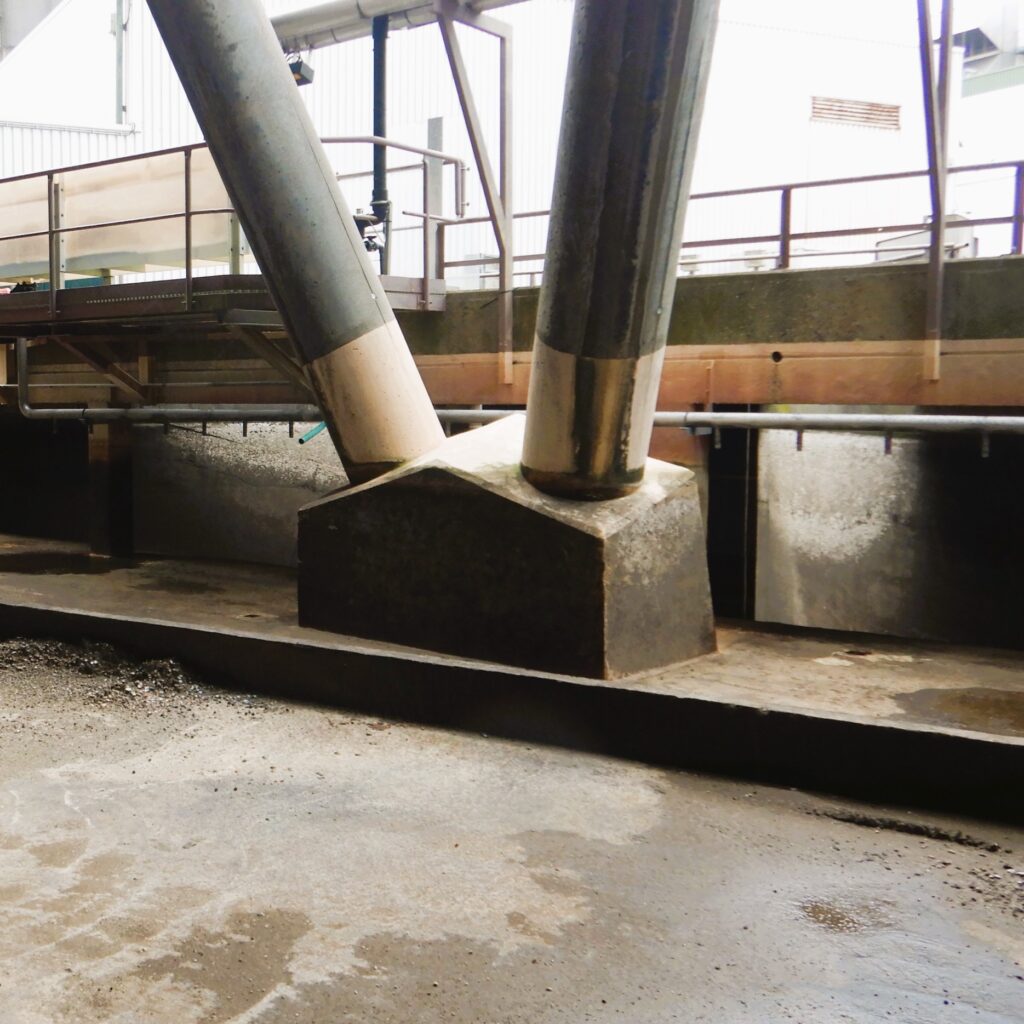
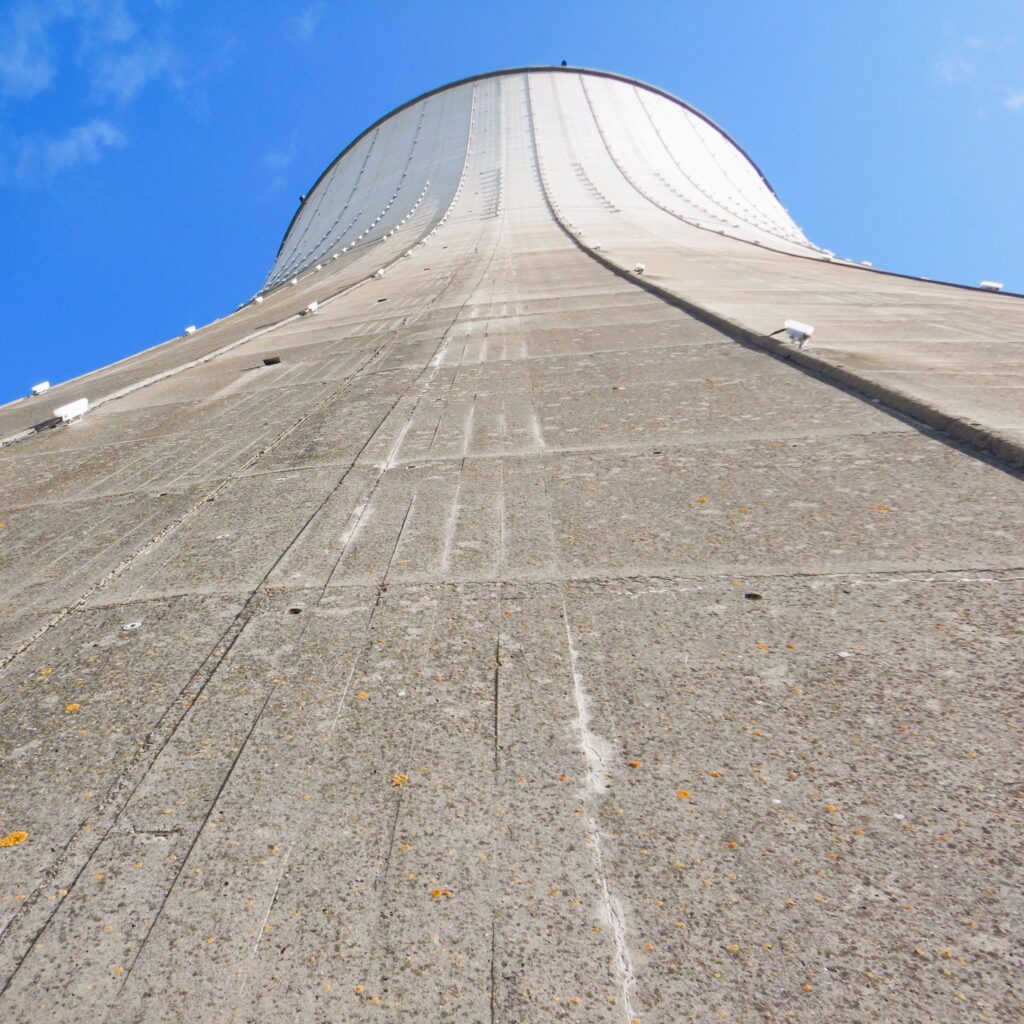
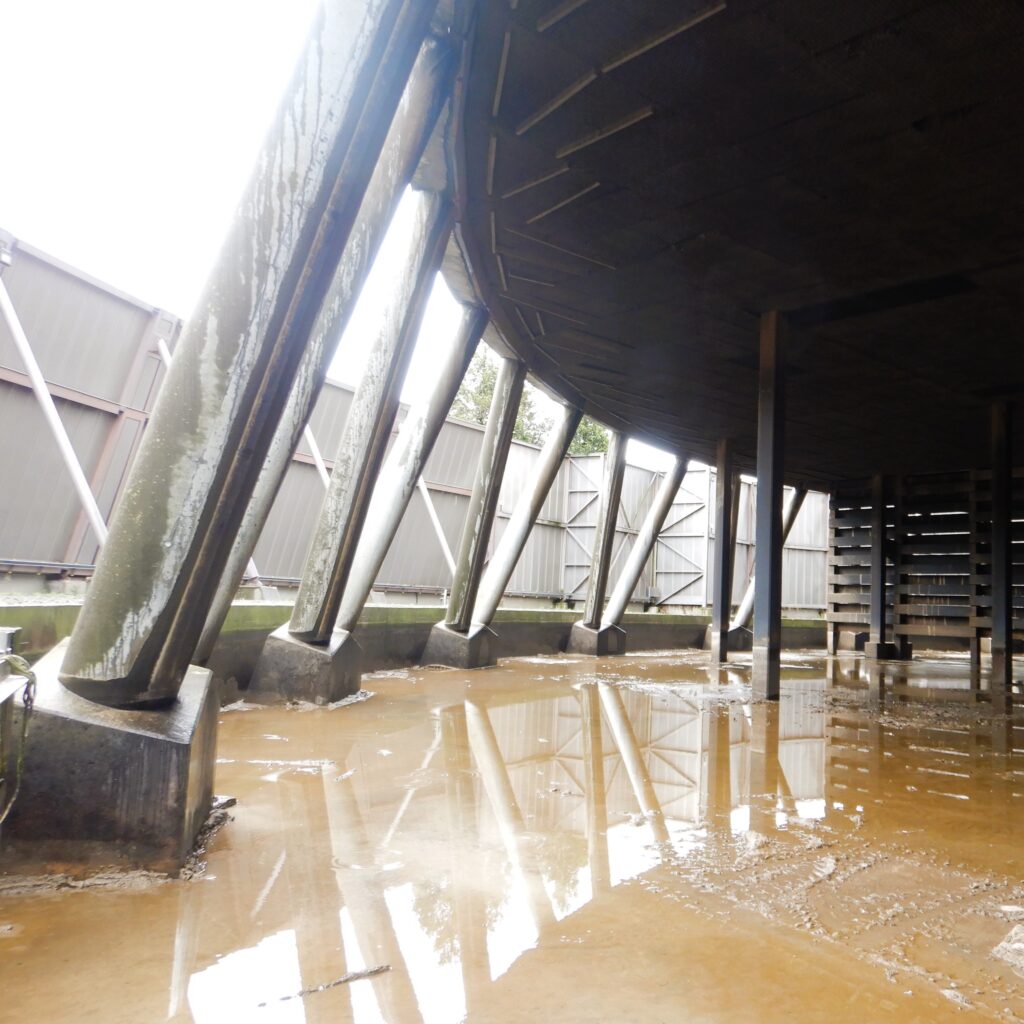
- Natural-draught cooling tower, combined-cycle power plant
- Location
- Drogenbos, Belgium
- Built
- c. 1992
- Engineering
- SANACON
- Study
- 2024 to 2025
Background & Challenge
The cooling tower of the combined-cycle power plant in Drogenbos has been in service for more than three decades. Earlier inspections documented its condition, but the owner needed an answer to a forward-looking question: which parts of the structure need action, when, and at what cost, given an expected remaining use of at least 20 more years.
The tower is difficult to access, and loose concrete at height is a safety risk. Treating the entire shell as a precaution would be expensive; waiting for visible damage would be too late. The owner needed a data-driven maintenance and inspection plan.
The Solution by Sanacon
Sanacon combined an extensive concrete investigation with a probabilistic service life analysis in DIMCOST.
Concrete investigation on a fixed grid: After a file study and plan of approach, the shell was sampled on a fixed measurement grid over 5 height levels and 4 orientations. Concrete cover, carbonation depth and chloride content were measured on site and in the laboratory.
Probabilistic service life analysis: In DIMCOST, the scatter in concrete cover and carbonation depth was modelled statistically to calculate the probability of carbonation-induced depassivation per location and per level, up to an age of 100 years. The models are based on fib Bulletin 34, fib Bulletin 59 and CUR 121.
Maintenance and inspection strategy: The results were translated into maintenance actions per structural component according to NBN EN 1504-9, a risk level per component, and an inspection frequency with a high-level budget estimate.
Key Results & Impact
Targeted protection instead of full treatment: The inner shell and the lower part of the outer shell need no intervention. The risk is concentrated in the upper half of the outer shell, where a vapour-open, carbonation-retarding coating is advised.
Risk register per component: Every part of the structure, from shell and inclined columns to water basin and access stair, received a risk level and a specific action: do nothing, protect or follow up.
Inspection plan the owner can budget: A clear inspection cycle (every 2 or 5 years depending on risk, with drone inspection of the shell) and a long-term measurement campaign, each with a budget estimate.
Instead of treating the entire tower, DIMCOST pinpointed where and when intervention adds value, turning inspection data into a maintenance plan the owner can plan and budget for.


More use cases
Cooling towerCooling tower DrogenbosView case →
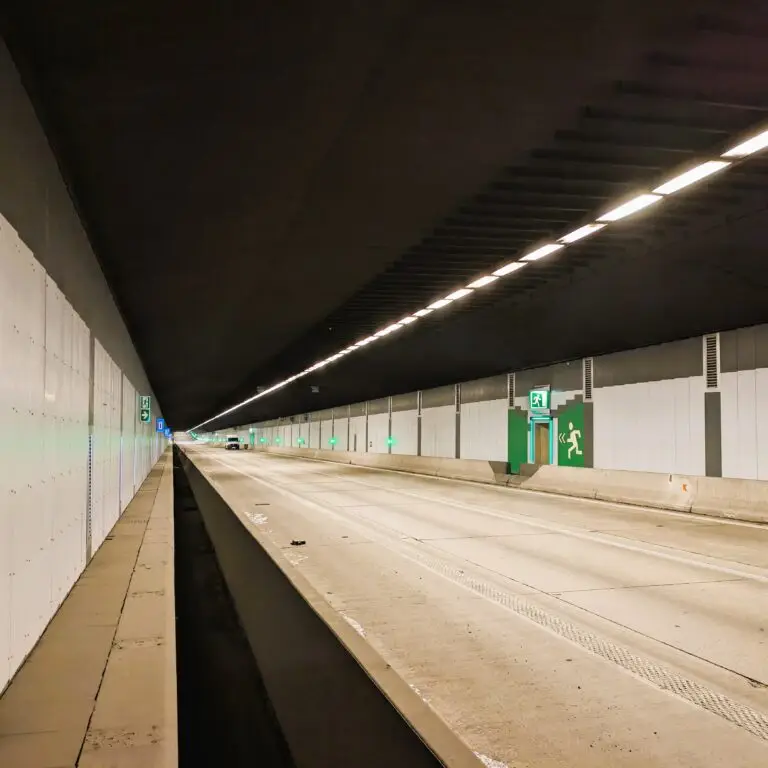
Road tunnelBeverentunnelView case →
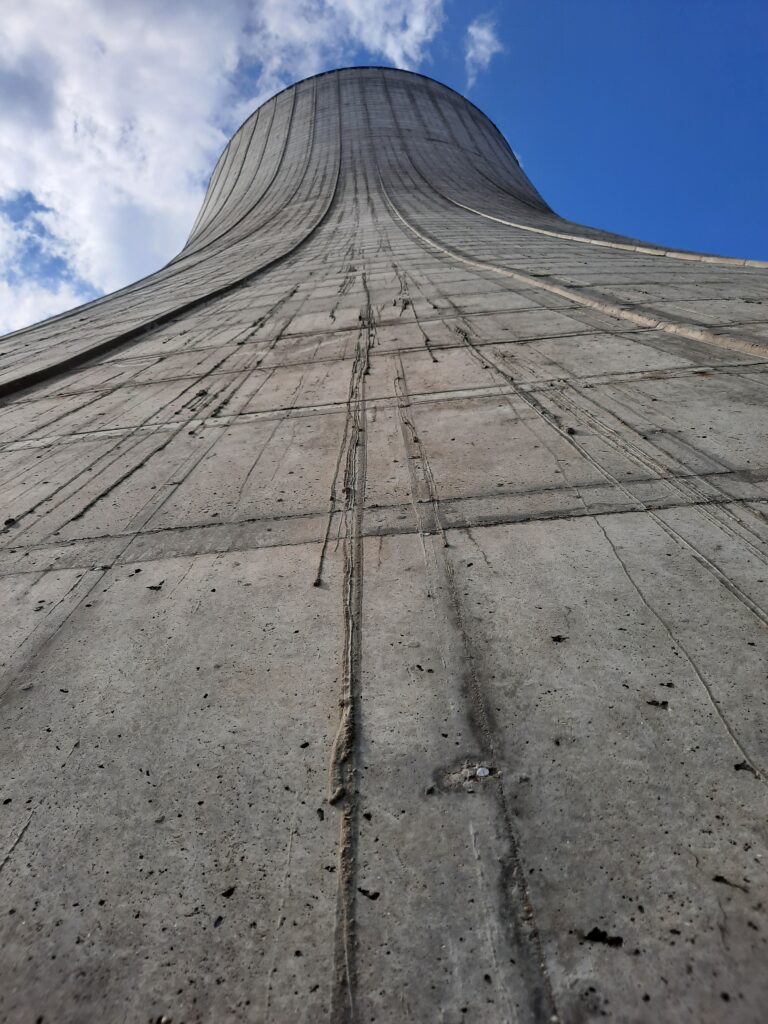
Cooling towerCooling tower ZandvlietView case →
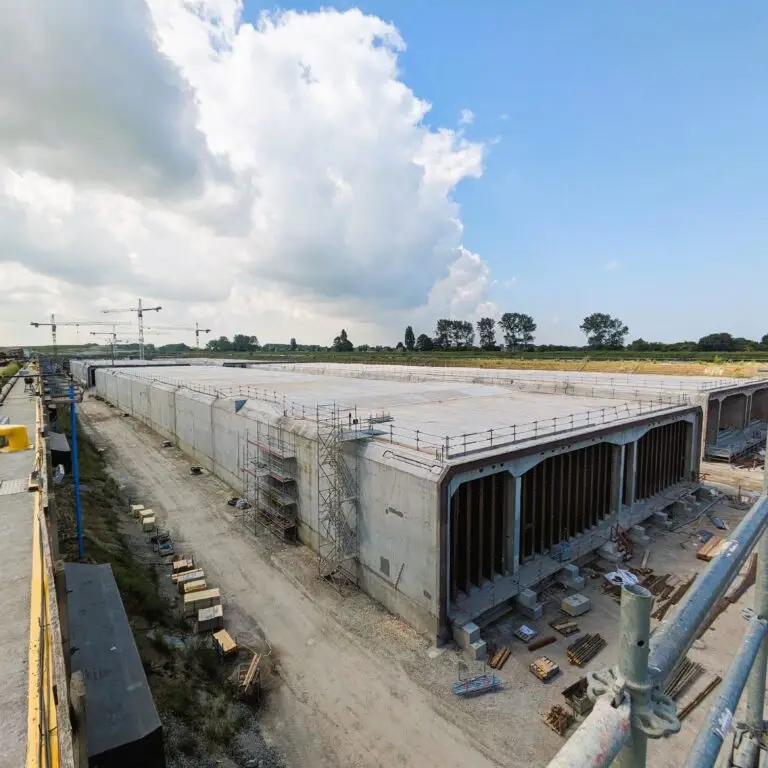
Tunnel segmentsTunnel segments Scheldt tunnelView case →
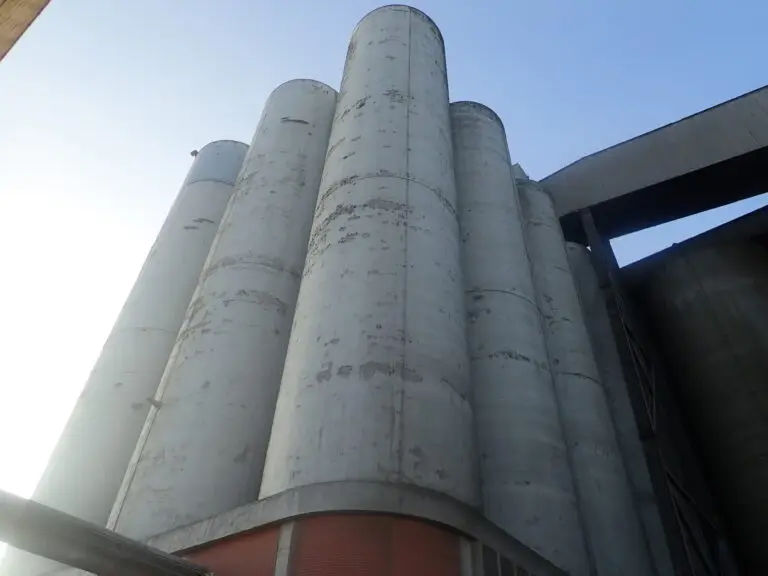
Industrial siloEurosilo GentView case →
One group, from inspection to decision
DIMCOST is developed within the SANACON group. Together with our sister companies, we cover the full chain from data capture on site to a well-founded maintenance strategy.
Plan a demoEngineering and structural advice: concrete durability, service life analysis, repair design and cathodic protection. Ghent University spin-off.
Visit sanacon.be →On-site concrete testing and core drilling: the field data on cover, carbonation and chlorides that feed the DIMCOST models.
Visit betonplus.be →Industrial drone inspections and 3D models, loaded directly into DIMCOST to map defects and track changes over time.
Visit medexon.com →See what DIMCOST can tell you about your own asset
Share your inspection data or describe your structure. We show you how a service life analysis turns it into a maintenance plan you can budget.